Sunday, May 21, 2006

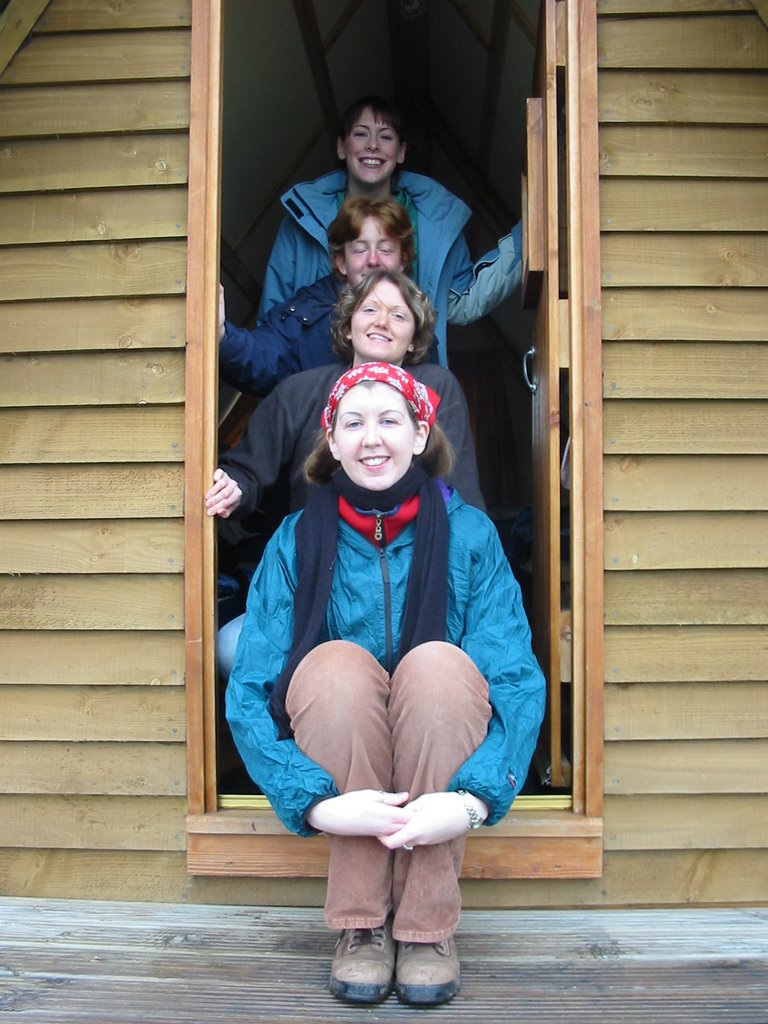
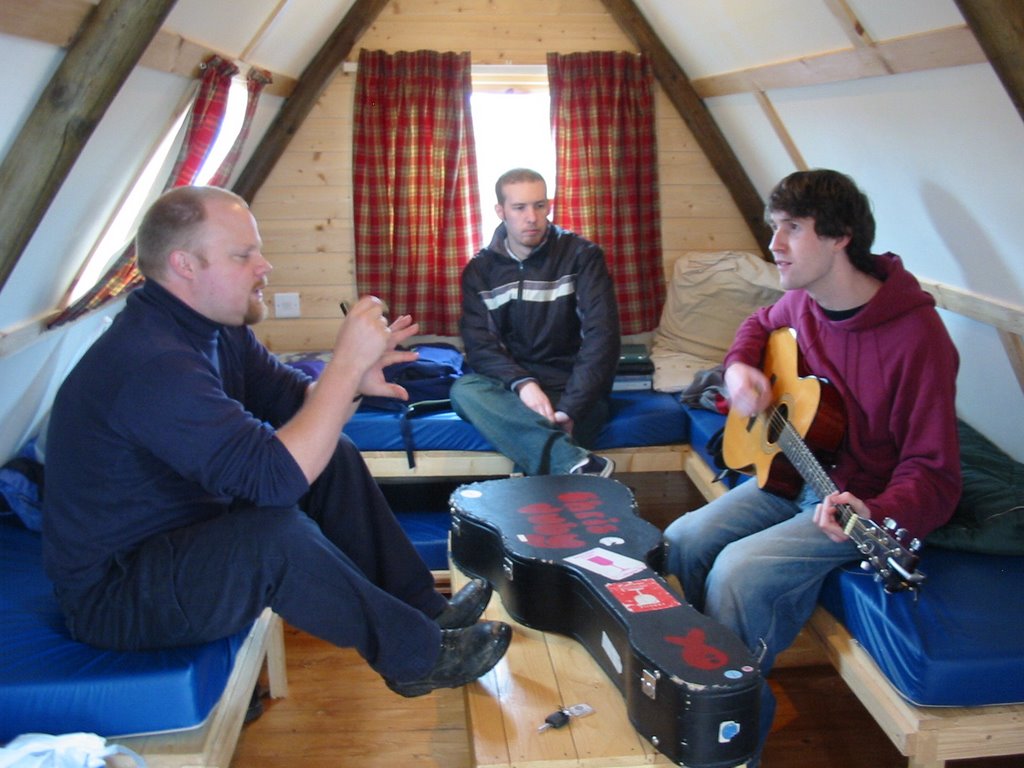
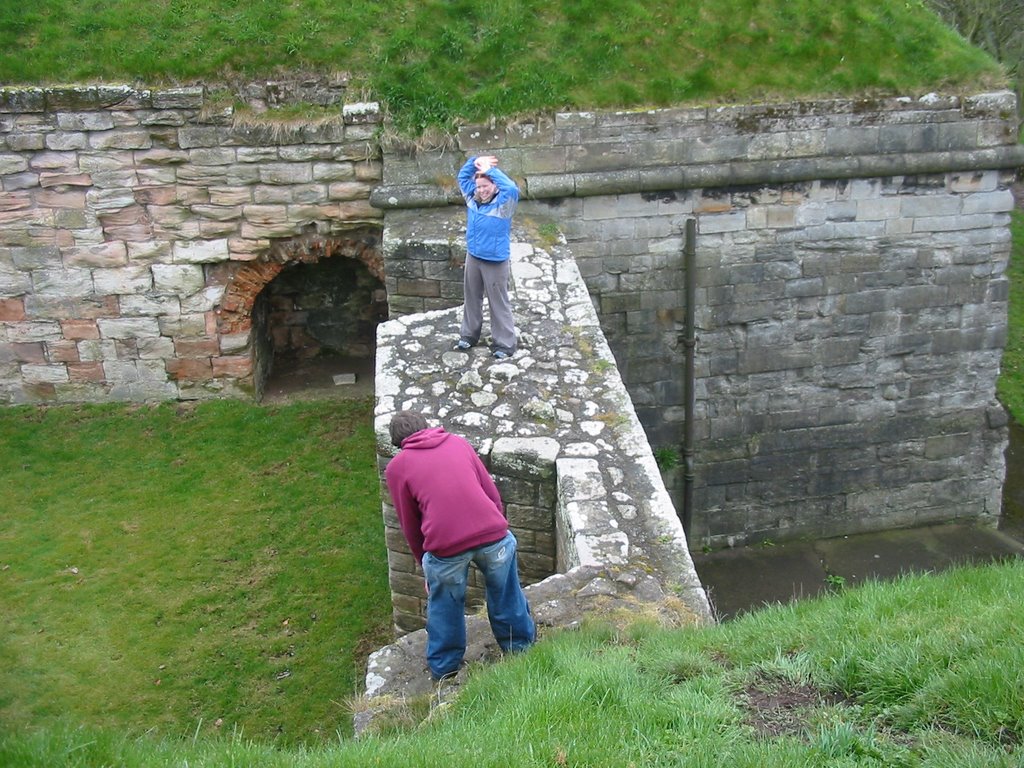
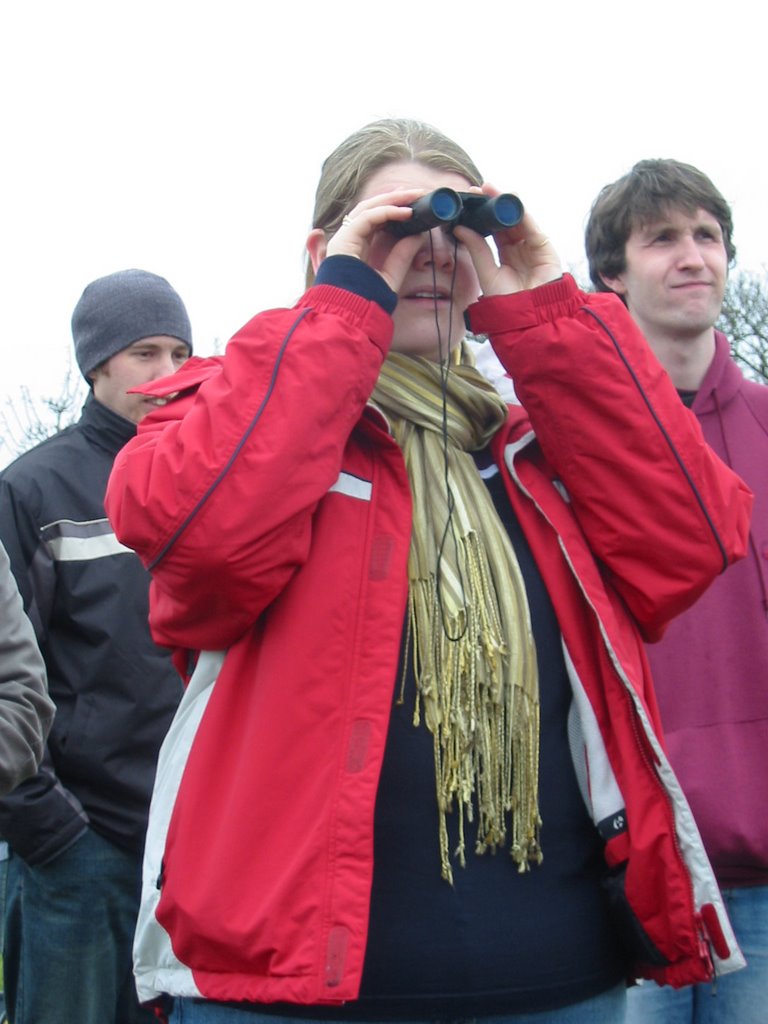
Party pics


Saturday, May 20, 2006

A letter from Cyprian

This seems a cheerful world, Donatus, when I view it from this fair garden, under the shadow of these vines. But if I climbed some great mountain and looked out over the wide lands, you know very well what I would see-brigands on the high roads, pirates on the seas; in the amphitheatres men murdered to please applauding crowds; under all roofs misery and selfishness. It is really a bad world, Donatus, an incredibly bad world. Yet in the midst of it I have found a quiet and holy people. They have discovered a joy which is a thousand times better than any pleasures of this sinful life. They are despised and persecuted, but they care not. They have overcome the world. These people, Donatus, are the Christians - and I am one of them.

St. Cyprian, c. 258, a letter

Incarnation...behind the scenes

I was skimming through Wild at Heart by John Eldredge this morning, and was struck by the reminder that the night of Jesus' birth was no 'silent night' in heaven.

Eldredge points out that our 'Silent Night' or 'Away in a Manger' picture of the nativity scene, quiet and intimate, is in many ways a deceptive one. For a fuller picture you have to turn to Revelation 12:

A great and wondrous sign appeared in heaven: a woman clothed with the sun, with the moon under her feet and a crown of twelve stars on her head. She was pregnant and cried out in pain as she was about to give birth. Then another sign appeared in heaven: an enormous red dragon with seven heads and ten horns and seven crowns on his heads. His tail swept a third of the stars out of the sky and flung them to the earth. The dragon stood in front of the woman who was about to give birth, so that he might devour her child the moment it was born. She gave birth to a son, a male child, who will rule all the nations with an iron scepter...

And there was war in heaven. Michael and his angels fought against the dragon, and the dragon and his angels fought back. But he was not strong enough, and they lost their place in heaven. The great dragon was hurled down ‚— that ancient serpent called the devil, or Satan, who leads the whole world astray. He was hurled to the earth, and his angels with him.

(Rev 12: 1-5, 7-9)

Eldredge continues...
As Philip Yancey says, I have never seen this version of the story on a Christmas card. Yet is is the truer story, the rest of the picture of what was going on that fateful night. Yancey calls the birth of Christ the Great Invasion, "a daring raid by the ruler of the forces of good into the universe's seat of evil." Spiritually speaking, this is no silent night. It is D-Day. "It is almost beyond my comprehension too, and yet I accept that this notion is the key to understanding Christmas and is, in fact, the touchstone of my faith. As a Christian I believe that we live in parallel worlds. One world consists of hills and lakes and barns and politicians and shepherds watching their flocks by night. The other consists of angels and sinister forces" and the whole spiritual realm.

Thursday, May 18, 2006

God in her arms

Mary, did you know that your baby boy
is Lord of all creation?
Mary, did you know that your baby boy
will one day rule the nations?

Did you know that your baby boy
is Heaven's perfect Lamb?
The sleeping child you're holding
is the great I Am!

From the song 'Mary, Did You Know?', by Mark Lowry and Buddy Greene.

I came across this song today on an old CD, remembering how much I like it, despite the cheesiness. For me, it captures perfectly some of the thrilling impossibilities of the Incarnation. Reminds me of a joking comment made half-seriously by a (believing) friend earlier in the week: "How can an infinite God be contained in a finite body? It doesn't make sense!"

The question is brought into even starker relief in this song. In the Gospels our account of Jesus is of an adult, mature and in control, but here we're reminded that Mary held the Creator of the universe asleep in her arms. As an earlier line in the song puts it: "When you kiss your little baby, you kiss the face of God!"

Wow! What an incredible mystery, a miracle beyond miracles. The Lord of creation, "through whom all things were created" (1 John 3) was himself created as a little baby, who fed and cried like any other. As Philippians 2:7 states, this is a God who "emptied himself, taking the form of a slave, being born in human likeness."

And I thought quantum physics was crazy!

Monday, May 15, 2006

Riddling

If you're feeling brave, check out this riddle - it's hard but definitely satisfying!

The author remarks that most people don't get past level 1. Well, I managed that but I'm stuck on Level 3.5/4!

You'll need to know some (very) basic html.. at least enough to check out the source code.

I'm happy to give hints up to Level 3 - after that point, I'm needing hints myself!

Thursday, May 11, 2006

PAUL on avoiding captivity

Colossians 2:2-4, 8

"My purpose is that they may be encouraged in heart and united in love, so that they may have the full riches of complete understanding, in order that they may know the mystery of God, namely, Christ, in whom are hidden all the treasures of wisdom and knowledge. I tell you this so that no-one may deceive you by fine-sounding arguments...

See to it that no-one takes you captive through hollow and deceptive philosophy, which depends on human tradition and the basic principles of this world rather than on Christ.

(NIV)

"I want you woven into a tapestry of love, in touch with everything there is to know of God. Then you will have minds confident and at rest, focused on Christ, God's great mystery. All the richest treasures of wisdom and knowledge are embedded in that mystery and nowhere else. And we've been shown the mystery! I'm telling you this because I don't want anyone leading you off on some wild-goose chase, after other so-called mysteries, or 'the Secret.'"
(The Message)

Colossians 2: 20-23

"Since you died with Christ to the basic principles of this world, why, as though you still belonged to it, do you submit to its rules: 'Do not handle! Do not taste! Do not touch!'? These are all designed to perish with use, because they are based on human commands and teachings. Such regulations indeed have an appearance of wisdom, with their self-imposed worship, their false humility and their harsh treatment of the body, but they lack any value in restraining sensual indulgence."
(NIV)

"So, then, if with Christ you've put all that pretentious and infantile religion behind you, why do you let yourselves be bullied by it? 'Don't touch this! Don't taste that! Don't go near this!' Do you think things that are here today and gone tomorrow are worth that kind of attention? Such things sound impressive if said in a deep enough voice. They even give the illusion of being pious and humble and ascetic. But they're just another way of showing off, making yourselves look important."
(The Message)

We've been considering in cell the mystery of Christ revealed to our minds (as well as our hearts), and what it is to grow in understanding and knowledge, something Paul brings up again and again in the early section of Colossians. It's striking to read Eugene Peterson's take on the passage in The Message version.

Wednesday, May 10, 2006

CS LEWIS on Divine Humility

"I call this Divine humility because it is a poor thing to strike our colours to God when the ship is going down under us; a poor thing to come to Him as a last resort, to offer up 'our own' when it is no longer worth keeping. If God were proud He would hardly have us on such terms: but He is not proud, He stoops to conquer. He will have us even though we have shown that we prefer everything else to Him, and come to Him because there is 'nothing better' now to be had."

(from The Problem of Pain)

Tuesday, May 09, 2006

Sticky Lyrics

"And I see losing love
Is like a window in your heart;
Everybody sees you're blown apart
Everybody feels the wind blow."

I've always liked these lyrics.. not sure exactly why. I think perhaps they've made a lot of sense at one or two significant points in my life - and song-memories are particularly sticky.

Anyone recognise the song?

From the same album, (in)famous in my family was this genius chat-up line:
"Say, ain’t we walking down the same street together on the very same day?"

Wednesday, May 03, 2006

"For your sake, O my God"

"Give ear, O God, and hear; open your eyes and see the desolation of the city that bears your Name. We do not make requests of you because we are righteous, but because of your great mercy. O Lord, listen! O Lord, forgive! O Lord, hear and act! For your sake, O my God, do not delay, because your city and your people bear your Name." (Daniel 9:18-19)

I have previously posted on praying in Jesus' name, but I started thinking again this evening about what it means to pray for the sake of God's name.

In Deuteronomy 9 Moses tells the Israelites that the LORD will give them victory not because of their own righteousness, (on the contrary they are "a stiff-necked people"), but because of the promise he made to their forefathers. He reminds them of their rebellion 40 years earlier at Mount Horeb and points out, "You have been rebellious against the LORD ever since I have known you." (v.24) Moses reminds them that he lay prostate before the LORD for 40 days and 40 nights praying for them, because they had made the LORD angry and he said he would destroy them.

As he prays, Moses is clear-headed enough to realise that the Israelites deserve judgement and the only thing left in their favour is that they are the LORD's own, that they are called by his name:

"Overlook the stubborness of this people, their wickedness and their sin. Otherwise, the country from which you brought us will say, 'Because the LORD was not able to take them into the land he had promised them, and because he hated them, he brought them out to put them to death in the desert.' But they are your people, your inheritance that you brought out by your great power and your outstretched arm."

It's almost as if Moses is appealing to God's pride, for lack of a better word. For better or worse, He has staked his reputation (his 'name') and his honour on rescuing the Israelites, and has promised to bring them to the promised land. So there's really no option...

The LORD doesn't reply directly at first, but he invites Moses to return up the mountain with some new stone tablets (he broke the first set) - a 'let's try this again'.

Moses ends the recollection by recounting God's almost-resigned instruction to get going:

"'Go,' the LORD said to me, 'and lead the people on their way, so that they may enter and possess the land that I swore to their fathers to give them.'"


(On a side note, while these are a people who define themselves by their relationship with "the LORD our God", their God most frequently references himself by relationship with them: "the God of Abraham, Isaac and Jacob.")


In John's Gospel, Jesus' encouragment to ask 'in my name' is tied together with his identification of himself with the Father:

"How can you say, 'Show us the Father'? Don't you believe that I am in the Father, and that the Father is in me? ... And I will do whatever you ask in my name, so that the Son may bring glory to the Father. You may ask me for anything in my name, and I will do it." (John 14:9-14)

And again, in John 16:

"Now is your time of grief, but I will see you again and you will rejoice, and no-one will take away your joy. In that day you will no longer ask me anything. I tell you the truth, my Father will give you whatever you ask in my name. Until now, you have not asked for anything in my name. Ask and you will recieve, and your joy will be complete.

"Though I have been speaking figuratively, a time is coming when I will no longer use this kind of language but will tell you plainly about my Father. In that day you will ask in my name. I am not saying that I will ask the Father on your behalf." (v. 22-26)

And later, in his prayer in John 17:
"Holy Father, protect them by the power of your name - the name you gave me - so that they may be one as we are one. While I was with them, I protected them and kept them safe by that name you gave me." (v.11-12)

God has given his name to Jesus - which is why Jesus is able to refer to himself as 'I am' (most clearly in John 8:58). In other words, to pray in Jesus' name is to pray in God's name. When he tells the disciples that they haven't asked in his name up to this point (v. 24), he's saying that they haven't recognised just who he is. To ask in Jesus' name is to recognise that he is Lord and God.

"Therefore God exalted him to the highest place
and gave him the name that is above every name,
that at the name of Jesus every knee should bow,
in heaven and on earth and under the earth,
and every tongue confess that Jesus Christ is Lord,
to the glory of God the Father."
(Philippians 2:9-11)

What name has God given Jesus, the 'name above every name', except his own?


This deserves further reflection, but I'll leave it there for this evening. Comments or ideas anyone?

Tuesday, May 02, 2006

Mythical Method?

"The most exciting phrase to hear in science, the one that heralds new discoveries, is not 'Eureka!', but 'That's funny …'"

Isaac Asimov... speaking against the scientific method!

I have the quote on my wall in my lab, but sadly I continue to propagate ideas like these 10 Myths of Science.

Physics isn't for sensible people

I recently came across an old copy of Bluff your way in the Quantum Universe, a taster/guide that I picked up as a present a few years back and ended up keeping!

Quantum theory is the strangest stuff you've ever heard taken seriously. Its sheer weirdness makes it a favourite part of physics for me, despite the tricky maths that haunted the latter half of my degree.

This very short book serves as a fun introduction. Here's a taster:

"Quantum theory challenges, at the very least, notions of Causality, Predictability, Reversibility, Continuity, Locality, Order, Separateness (sometimes called Isolability), Clear Definition, Accurate and Informative Measurement, Objectivity, Either/or Thinking and, most controversially, Certainty. It threatens notions of solidity and substance, and suggests that there are absolutely no absolutes." (page 28)

It goes on to discuss each of these, but you'll have to borrow the book from me if you want to know what they're all about!

Sunday, April 30, 2006

"What do you want me to do for you?"

I've been reading Mark's Gospel recently, and earlier this week I was reflecting on a series of stories in Mark 10. The chapter ends with two, apparently unconnected, stories: James and John ask for places of honour in Jesus' kingdom, and blind beggar Bartimaeus receives his sight.

At first glance, little connection is apparent, but both incidents are tied together by a simple question: "What do you want me to do for you?"

Jesus asks this question twice, to James and John and later to Bartimaeus, and he receives two very different responses.
  • James and John: "They replied, 'Let one of us sit at your right and the other at your left in your glory.'" (v.37)
  • Bartimaeus: "The blind man said, 'Rabbi, I want to see.'"
In many ways, James' and John's request actually reflects a vote of confidence in Jesus. They are picturing a glorious ending, where Jesus is king in Jerusalem and they, as his trusted disciples, will share in his rule. But their question also reveals how poorly they have understood what Jesus has been saying. He has just been explaining to them (in v.32-34) - for the third time and in the clearest possible language - how he will be put to death in Jerusalem:

"They will condemn [the Son of Man] to death and will hand him over to the Gentiles, who will mock him and spit on him, flog him and kill him." (v.33-34)

Tom Wright points out that the disciples probably thought (or preferred to think) that Jesus was talking in pictures, as he often did, and did not mean literally. After all, he closes with the mysterious: "Three days later he will rise."

But clearly their request is born in their ambition and Jesus gently denies their request, warning them that they don't know what they're asking for. He takes the opportunity to describe once again the upside-down nature of the new kingdom: "whoever wants to become great among you must be your servant, and whoever wants to be first must be slave of all" (v.43).

Bartimaeus' request is also a personal one. He doesn't ask for world peace, or for power or riches, he wants to see. And he is healed immediately.

"'Go,' said Jesus, 'your faith has healed you.'" (v.52)

It's interesting to remember that the last time we come across a story of a blind man being healed, in Mark 8, it follows directly on from Jesus berating his disciples about their lack of understanding and their failure to see:

"Why are you talking about having no bread? Do you still not see or understand? Are your heart's hardened? Do you have eyes but fail to see, and ears but fail to hear?" (Mark 8:17-18)

Again, in this chapter, Mark follows a story about the disciples' lack of understanding with one about a blind man receiving his sight. In setting these stories against each other, Mark leaves us asking where the real blindness lies.

I'm left pondering my own answer to Jesus' question: "What do you want me to do for you?" How often do I assume I've got the picture of what God's doing, wanting to get involved, wanting to gain influence and status? Or do I answer honestly out of my weakness and need: "I want to see."

Friday, April 28, 2006

The Early Christians...

...In their own words.

I've been dipping into The Early Christians In Their Own Words, a 'topically arranged collection of primary sources', edited by Eberhard Arnold, the founder of the Bruderhof community.

These texts, translated from Greek, Latin and Hebrew, range from letters and accounts to apologetics, poetry and confession, and offer a fascinating glimpse into the life of the 1st and 2nd century Christians.

The most striking texts I've read so far are those concerning the martyrs. The most revealing perhaps is a letter from Gaius Pliny, the governor in Asia Minor, to the Emperor Trajan, asking for advice on prosecuting Christians: "I do not know what or how much to punish or to investigate." He asks whether Christians should be punished even if there is no crime, how he should determine guilt where names had been given by an informer, and whether he should acquit those who denied being a Christian and worshipped the statues of the gods. As regards the last, he points out: "It is said that those who really are Christians cannot be compelled to do any of these things in any circumstances."

Gaius Pliny explains that Christians who continued to confess their faith, despite threat of the death penalty, were "led away to their death, for I had no doubt that, whatever is was that they confessed, their stubborness and inflexible obstinacy certainly deserved to be punished."

He also reveals his concern about the large number of those 'imperiled': "The contagion of this superstition has spread not only in the cities but even to the villages and to the country districts."

Trajan replies that Pliny has followed the correct procedure and explains that Christians "should not be sought out", and should be pardoned on 'repentance'.

There is a further letter from the Emperor Hadrian, again concerning the legal implications. His instruction is that accusations against Christians should go through the proper channels and proof should be given that "the people concerned are acting against the law". He also speaks strongly against accusations brought with "slanderous intention".

It's amazing to get such a clear picture, from the Roman authorities, of the life and health of the early church. The letters reveal the very real danger of life as an early Christian and yet the church is clearly growing and thriving, and with a reputation preceeding it - that the Christians would rather die than recount their faith.

Finally, Pliny also offers what is apparently the earliest external account of Christian worship, describing "their custom to meet on a fixed day before sunlight and, alternating with each other, to sing a hymn to Christ as to a god.... After doing this it was their custom to part from one another and then to meet again to share an ordinary and harmless meal."


(If you're interested in reading the correspondance for yourself, the link at the top of the page takes you to the ebook version, in pdf format. )

Monday, April 24, 2006

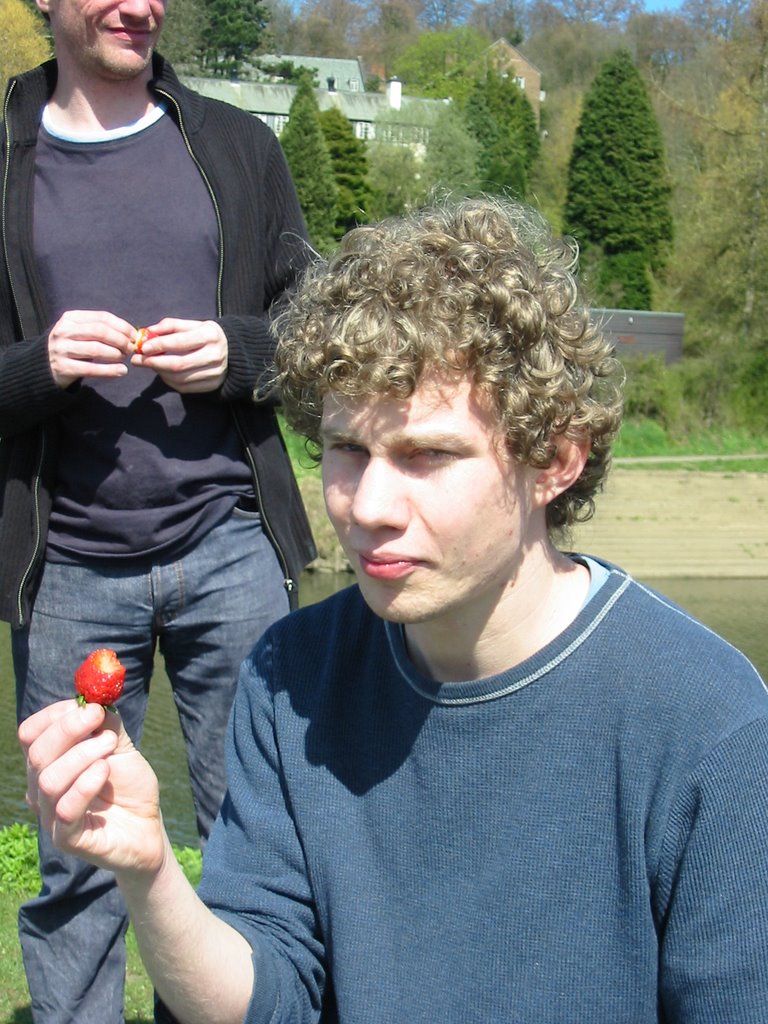
The first picnic of the year!

Duncan posing with a strawberry


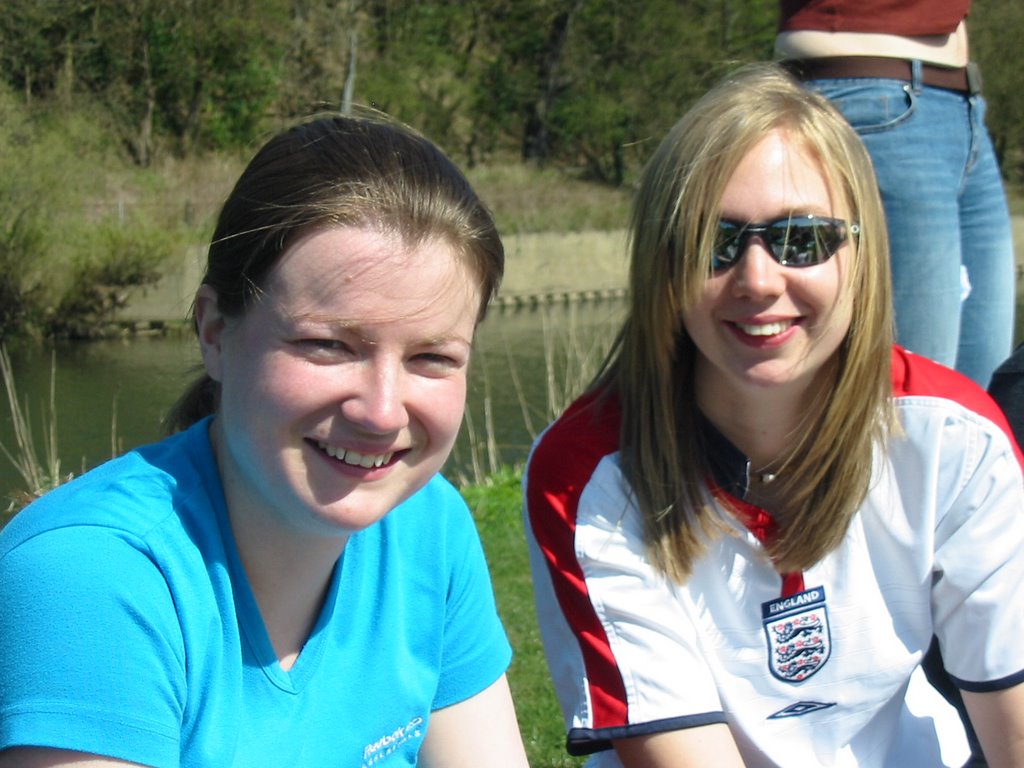
Cool people


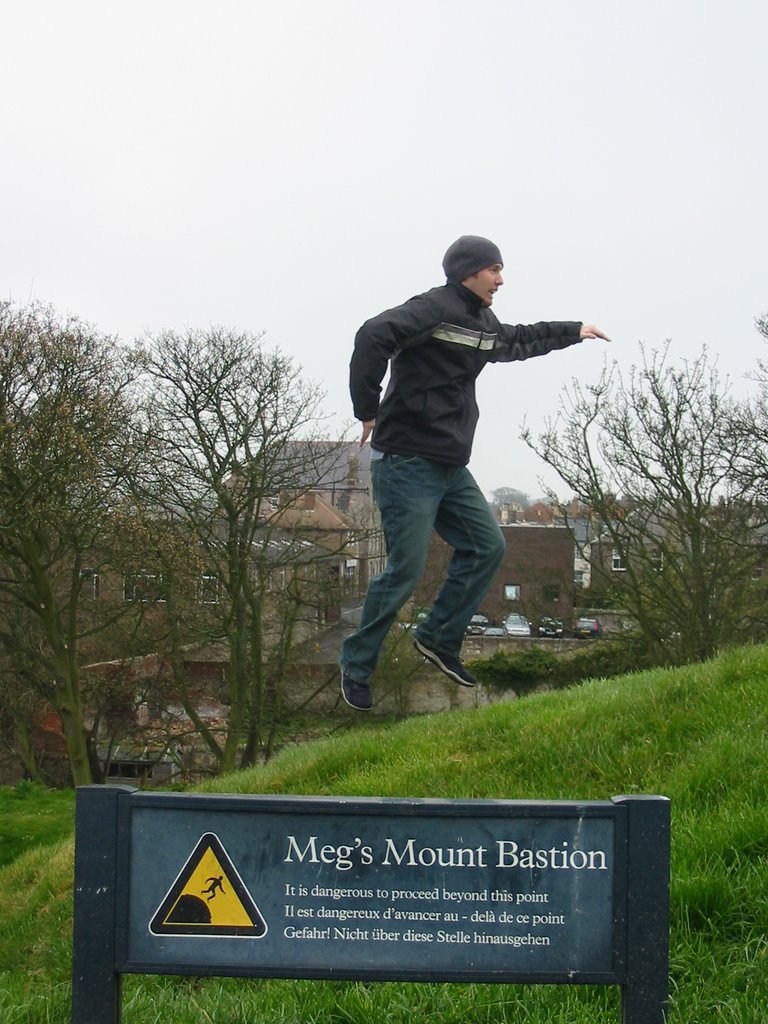
Strange people

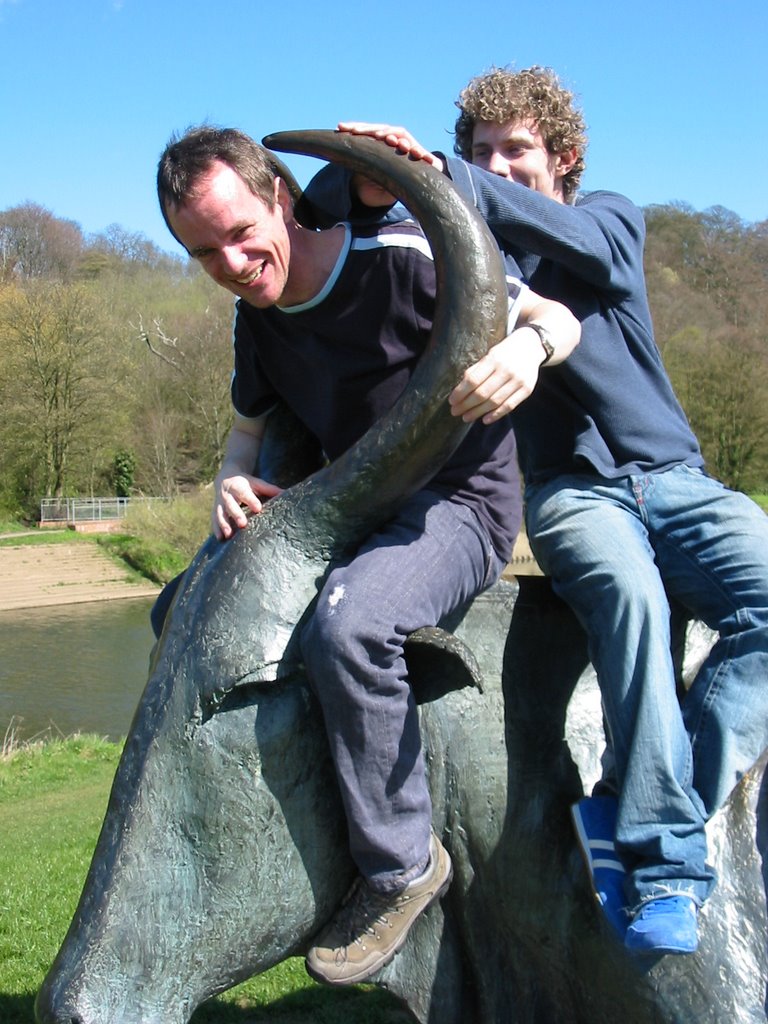
Cow-jumping


Saturday, April 22, 2006

Take some weirdos...


Wigwams

Girls in the house

Boys in their house

Chris barbecues his guitar

The percussion backing proves unreliable...

Keep off the banking!!

Hmmmm....


Did he fall or was he pushed?


Seymour the fearless

Berwick

Bridges of Berwick


The walls prove effective and we surrender gracefully


Trainspotting again..?


Not today thank you..

On the beach

Seymour makes 'stone age' arrowheads!

Joce goes for a paddle

Is this art?

Bamburgh

Bamburgh Castle - quite amazing!

The girls attack the dunes

Trespassing... us?

Claire explores a mysterious hole

Rewarded with a cream tea

Wednesday, April 19, 2006

Essex at Easter

A walk in the country is somewhat traditional on a bank holiday...

Dad and Karen (our American lodger)


Clearly deep in conversation...


London skyscape - just visible through the afternoon haze

Newark Castle

Newark makes an excellent stopping off point for a trip down to London, as it falls about half-way. I spent a sunny hour there last week, and enjoyed a walk around the Castle and gardens.


Sunday, April 16, 2006

The Pulley - GEORGE HERBERT

WHEN God at first made Man,
Having a glass of blessings standing by—
Let us (said He) pour on him all we can;
Let the world's riches, which dispersèd lie,
Contract into a span.

So strength first made a way,
Then beauty flow'd, then wisdom, honour, pleasure:
When almost all was out, God made a stay,
Perceiving that, alone of all His treasure,
Rest in the bottom lay.

For if I should (said He)
Bestow this jewel also on My creature,
He would adore My gifts instead of Me,
And rest in Nature, not the God of Nature:
So both should losers be.

Yet let him keep the rest,
But keep them with repining restlessness;
Let him be rich and weary, that at least,
If goodness lead him not, yet weariness
May toss him to My breast.

Saturday, April 15, 2006

Footprints in the sand

A conversation with my dad pointed me in the direction of these very cool prehistoric footprints at Formby Point, near Liverpool.

These footprints are thought to have been created about 4000 years ago, by humans and animals walking in the mud and sand along the shore. No one's sure how, but huge numbers of footprints in this intertidal region were not washed away but left exposed, perhaps due to a lowering of sea level. They were later covered with a layer of sand, which over time turned into sedimentary rock.

In more recent years the sea has eroded these concealing layers to reveal the footprints beneath. They were first discovered almost 20 years ago and archeologists have raced to capture the prints in photographs and plaster casts because once exposed the prints are quickly destroyed by the sea. Amazing to think that such an interesting archaelogical find is being lost so quickly, and by the very process that was interrupted so long ago.

They have even discovered prints belonging to the auroch - a giant prehistoric ox that became extinct in Britain during the Bronze Age. The auroch stood 6 feet high and was 11 feet long!

I especially liked this foot detail of a young adult male, showing the pointed toe outlines of long uncut toenails! (from the Intertidal archeology page).

Friday, April 14, 2006

Easter Communion - Gerard Manley Hopkins

Pure fasted faces draw unto this feast:
God comes all sweetness to your Lenten lips.
You striped in secret with breath-taking whips,
Those crooked rough-scored chequers may be pieced
to crosses meant for Jesus; you whom the East
With draught of thin and pursuant cold so nips
Breathe Easter now; you serged fellowships,
You vigil-keepers with low flames decreased,

God shall o'er-brim the measures you have spent
With oil of gladness; for sackcloth and frieze
And the ever-fretting shirt of punishment
Give myrrhy-threaded golden folds of ease.
Your scarce-sheathed bones are weary of being bent:
Lo, God shall strengthen all the feeble knees.

Thursday, April 13, 2006

Story of Bread

I was entertained by this Story of Bread from 1949. It's hard to believe this stuff was ever meant to be taken 'seriously'!

Tuesday, April 11, 2006

Authority of Scripture

If the word of God discussion has been an interesting one, have a read of this post on the inerrancy of Scripture. The comments especially contain an interesting discussion on the relationship between inerrancy, authority and the nature of the Word.

Monday, April 10, 2006

Cravings

In my earlier post Henri Nouwen ends the quoted section with the following:

"It is a world that fosters addictions because what it offers cannot satisfy the deepest craving of my heart."

It left me reflecting on cravings and addictions, and I remembered these verses from Ecclesiastes:

"I have seen the burden God has laid upon men. He has made everything beautiful in its time. He has also set eternity in the hearts of men; yet they cannot fathom what God has done from beginning to end." (Ecclesiastes 3:10-11)

People often say that we ought to be content, and whilst I acknowledge the futility and ungraciousness of complaining about life, I fear being satisfied. The deep hunger in us, the heart that longs to be satisfied, is not an accident of our fallen human position (except in the sense that we have rejected the source of satisfaction). As Solomon says in the passage above, God has "set eternity in the hearts of men". He has made in us a heart that desires infinity, a craving that only He will satisfy. The Bible is full of that sense of expectancy: wanting more, being glad that this is not all there is, looking forward to a day when every hunger will be satisfied and every desire fulfilled.

"...but when perfection comes, the imperfect disappears...Now we see but a poor reflection as in a mirror; then we shall see face to face. Not I know in part, then I shall know fully, even as I am fully known." (1 Cor 13:10-13)

We often hear repeated that modern fable about the rich man who, despite owning more than we could imagine, still wants more. It is right to recognise that wealth, or any other earthly thing, will never satisfy but setting aside that deep dissatisfaction is not the answer. I want God to increase that craving in me, but at the same time keep reminding me that I will find my thirst slaked nowhere else.

Street Art

Following a conversation at the weekend, here's some of the 3D street art I was referring to. I love the Batman and Robin one especially, but there's plenty here to goggle at. Genius!

Searching where it cannot be found

A follow up to my earlier post, here Henri Nouwen reflects on the question: "To whom do I belong? To God or to the world?"

Many of my daily preoccupations suggest that I belong more to the world than to God. A little criticism makes me angry, and a little rejection makes me depressed. A little praise raises my spirits, and a little success excites me. It takes very little to raise me up or thrust me down...

As long as I keep running about asking: "Do you love me? Do you really love me?" I give power to the voices of the world and put myself in bondage because the world is filled with 'ifs'. The world says: "Yes, I love you if you are good-looking, intelligent, and wealthy. I love you if you have a good education, a good job, and good connections. I love you if you produce much, sell much, and buy much." There are endless 'ifs' hidden in the world's love. These 'ifs' enslave me, since it is impossible to respond adequately to all of them. The world's love is and always will be conditional. As long as I keep looking for my true self in the world of conditional love, I will remain 'hooked' to the world - trying, failing, and trying again. It is a world that fosters addictions because what it offers cannot satisfy the deepest craving of my heart.

As ever, Nouwen speaks deep sense. We put ourselves in bondage because tie ourselves to the world's expectations and demands. This is no freedom. And those demands have no power over us except that we give them. I'm reminded of a line in the sonnet 'Batter my heart' by John Donne, which struck me recently:
"But am betroth'd unto your enemy..."

We run around, desperately trying to please, to earn acceptance and love, and all the time we have a heavenly Father, who loves us desperately and is just waiting for us to come home.

HENRI NOUWEN on the Beloved

Henri Nouwen reflects on hearing the voice that says "You are my Beloved, on you my favour rests", from the book 'The Return of the Prodigal Son'.

As the Beloved of my heavenly Father, 'I can walk in the valley of darkness: no evil would I fear.' As the Beloved , I can 'cure the sick, raise the dead, cleanse the lepers, cast out devils.' Having 'received without charge,' I can 'give without charge.' As the Beloved, I can confront, console, admonish, and encourage without fear of rejection or need for affirmation. As the Beloved, I can suffer persecution without desire for revenge and receive praise without using it as proof of my goodness. As the Beloved, I can be tortured and killed without ever having to doubt that the love that is given to me is stronger than death. As the Beloved, I am free to live and give life, free also to die while giving life.

Saturday, April 08, 2006

Life of Pi by Yann Martel

This was a short reading interlude to enjoy some fiction, the mark of my holidays beginning!

There are reviews aplenty of this book, the 2002 winner of the Man Booker Prize, and I will add my praise but see no reason to repeat here what many have done so well. The Guardian's reviewer perhaps sums it up best: "The better story has a tiger in it."

I enjoyed the teasing way in which Yann Martel tests our credulity as the story continues. How far will we go with him? This is story in many ways about the power of storytelling, the extent to which we are willing to suspend disbelief for a good story, neatly paralled in the retelling at the end. As the Guardian's reviewer points out, the underlying narrative has the "neatness of fable".

For me, the most poignant moment of the story is the "bungled goodbye" at the end. Of all his interactions with Richard Parker, this one is perhaps the most credible and the least like story, and yet we're wrenched, like Pi, by the way in which this particular story doesn't end as it should. As he says, "What a terrible thing it is to botch a farewell...It's important in life to conclude things properly."

Friday, April 07, 2006

God's Grandeur

While we're on the subject, this is Gerard Manley Hopkins:

The world is charged with the grandeur of God.
It will flame out, like shining from shook foil;
It gathers to a greatness, like the ooze of oil
Crushed. Why do men then now not reck his rod?
Generations have trod, have trod, have trod;
And all is seared with trade; bleared, smeared with toil;
And wears man's smudge and shares man's smell: the soil
Is bare now, nor can foot feel, being shod.

And for all this, nature is never spent;
There lives the dearest freshness deep down things;
And though the last lights off the black West went
Oh, morning, at the brown brink eastward, springs --
Because the Holy Ghost over the bent
World broods with warm breast and with ah! bright wings.

Listen to it being read by Stanley Kunitz.

Thursday, April 06, 2006

The vote is open

I've finally finished selecting my 10 images of space and it's been fantastic to remind myself just how beautiful the universe is.

Some decisions were hard to make.. which nebulae would make it to the final cut?

Here's some images which were near-rejects:
Cygnus loop shockwave
Eskimo Nebula
Spiral galaxies collide
...and many others!

You may disagree with my choices, but all the images I chose have a particular significance.

I'm curious to know which are people's favourites and whether everyone has the same idea of beauty... Let me know your top 3 from the 10 images I've picked.

The Word of God is Living and Active

I'm making slow progress through NT Wright's 'Scripture and the Authority of God', mainly because I can only read small chunks before I have to stop and consider what's being said. It also keeps sparking off other chains of thought, which make concentrating on the next section tricky! Here are some further thoughts on the 'word of God' concept that I've been exploring as I work through the book.

In the New Testament the 'word' is generally used for the gospel (see Colossians 1:5). This 'word' is the story of Jesus, his death and resurrection, "told as the climax of the story of Israel and thus offering itself as both the true story of the world and the foundation and energizing force for the church's mission." (p.36)

But NT Wright goes on to point out that "the 'word' was not just information about the kingdom and its effects, important though that was and is. It was the way God's kingdom, accomplished in Jesus, was making its way in the world" (p.36). More than just a retelling of the story, this word carries power:

"I am not ashamed of the gospel, because it is the power of God for the salvation of everyone who believes: first for the Jew, then for the Gentile. " (Romans 1:16)

Or, in a slightly different sense:
"...because our gospel came to you not simply with words, but also with power, with the Holy Spirit and with deep conviction." (1 Thessalonians 1:5)

"And we also thank God continually because, when you received the word of God, which you heard from us, you accepted it not as the word of men, but as it actually is, the word of God, which is at work in you who believe." (1 Thessalonians 2:13)

In the verse above Paul is making clear that the gospel is not a story told by humans, the 'word of men', but the 'word of God'. The word of God is at work in all believers, that same creative power that spoke the universe into being (see earlier post) is bringing new creation in each one of us.

As NT Wright says, "the word was announced as a sovereign summons, and it brought into being a new situation, new possibilities, and a new life-changing power". (p.36)

He also seems to attribute a wider meaning to the concept of word / gospel as used in the NT:
"The earliest church was centrally constituted as the people called into existence, and sustained in that existence, by the powerful, effective and (in that sense and many others) 'authoritative' word of God, written in the Old Testament, embodied in Jesus, announced to the world, taught in the church." (p.37)

In the same way, NT Wright goes on to discuss the way in which Paul and the other New Testament authors were conscious of the importance of their own words and writings, believing themselves to be 'authorized' teachers, by the guidance and power of the Spirit. In his own words:

"The apostolic writings, like the 'word' which they now wrote down, were not simply about the coming of God's kingdom into the world; they were, and were designed to be, part of the means whereby that happened, and whereby those through whom it happened could themselves be transformed into Christ's likeness." (p.38)

Wednesday, April 05, 2006

Mitochondria and Eve

National Geographic have launched the Genographic Project in an effort to trace the journey of human beings across the globe.

Tracing DNA history is an area of science in which I have been interested for a while, although biology is certainly not my specialism. Here's a short explanation, which will hopefully give a sense of why cellular biology plays such an interesting and important part in tracing human history.

Inside every cell of your body are tiny structures called organelles (the nucleus is the most well known). One of these organelles is the mitochondrion. Mitochondria are often called 'cellular power plants' for their role in providing energy to the cell.

However, these little structures are important for another reason. Mitochondria are unusual because they have their own DNA, their own genetic code, and it is generally accepted that their history began as a separate organism. If this is the case, then these creatures have a symbiotic relationship with humans. But this is just part of the story, although an intriguing part!

Mitochondria reproduce like bacteria, by division ('binary fission'), essentially making them clones. They reproduce according to the energy needs of the cell and therefore their life cycle is not related to the life cycle of the cell. During human reproduction an egg nucleus and a sperm nucleus are joined and their genetic material combined to form a new genetic code. However, the mitochondria in the sperm cell are generally destroyed at fertilisation and so the embryo begins its life with mitochondria from the mother only.

So that's the background, here's where it gets interesting... As mitochondria are basically clones, very little genetic difference is seen between successive human generations, although mutation over time will introduce markers that enable a particular 'gene tree' to be identified. This makes them particularly useful in population genetic studies, such as the National Geographic project mentioned above, because they allow scientists to use these markers to trace the movements of populations across many generations and recognise links between widely dispersed peoples (e.g. between Koreans and Native Americans - see the Atlas of the Human Journey).

Comparing differences between mtDNA and working backwards to find the point at which it diverged also uncovers "the woman who is the most recent common matrilineal ancestor of all living humans", famously named Mitochondrial Eve. The age of 'Eve' can be approximated using the 'gene clock' technique, a way of tracing the point when two population groups have diverged by counting the number of genetic differences between their DNA sequences. She is thought to have lived in Africa about 150,000 years ago. While there will have been other women living at the same time, many of whom will have descendants today, only Mitochondrial Eve produced an unbroken line of daughters that persists to this day.

Controversial for some, perhaps, but certainly interesting - don't you agree?

Tuesday, April 04, 2006

10 beautiful things...

...to see in space!

1. Cat's Eye Nebula


2. Earthrise (taken by Apollo 8) - from NASA Historical Images


3. Gas pillars in Eagle Nebula (M16)


4. Hubble Ultra Deep Field (HUDP)
This picture looks back in time 13 billion years and despite covering a tiny fraction of the sky (3 arc minutes square) includes 10,000 galaxies! Those points of light? They're not stars...


5. Horsehead Nebula
The dark area that makes up the head is a dark nebula - a thick cloud of hydrogen gas and dust where new stars are being formed. The nebula can be seen here only because it blocks out the light of the emission nebula behind it.


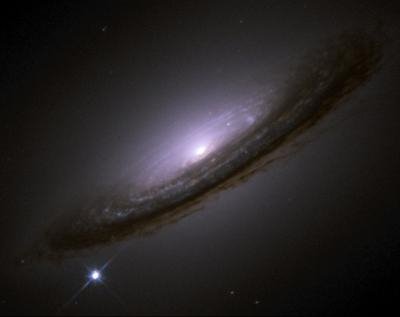
6. Supernova 1994D in Galaxy NGC 4526
Supernovae are massive explosions, often the dying moments of a massive star (although SN 199D is a type 1a supernova, caused by an explosion in a white dwarf star). They shine only briefly but for those few days may outshine the galaxy in which they reside! Supernovae are hugely important 'creation' events, as the force of the explosion forms many of the heavier elements, blasting them into space. (Fusion in stars forms elements up to iron on the Periodic Table, but heavier elements, e.g. copper, tin, silver, gold, are not formed by fusion.)


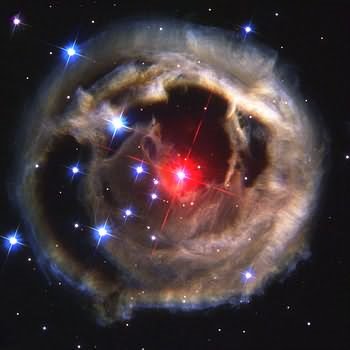
7. Light echo from Red Supergiant V838
This picture is one of a dramatic series of images taken by the Hubble telescope in early 2002 and showing a sudden brightening of star V838 Monocerotis, lighting up the dust clouds around it. It is called a light echo because the pictures show a ring of illumination gradually expanding around the star as the light travels outwards.


8. ...a picture I would love to take!
Images like this always stump the kids..even when they should know the answer!
I'm sure you'll figure it out straight away.. but can anyone work out the exposure time?


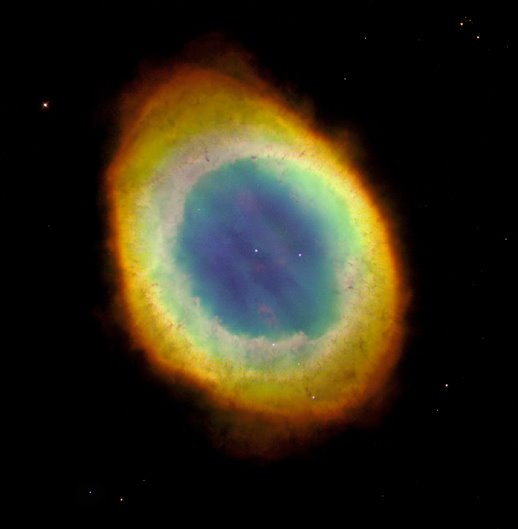
9. The Ring Nebula, in the constellation Lyra
This is one of the most famous Planetary Nebulae, the gas and dust drifting away from the white dwarf (seen in the centre of the image) left behind at the end of a star's life. This is an almost true-colour image, the colours are from the different elements glowing in the dust (blue - hot helium, green - ionized oxygen, red - ionized nitrogen).


10. Twisters in the Lagoon Nebula
The Lagoon Nebula is one of only a few nebulae visible to the naked eye in the Northern Hemisphere and can be seen in the constellation of Sagittarius. Check out the larger picture and explanation.


(Note: all these pictures - except the star trails - are from NASA and therefore copyright-free)

Sunday, April 02, 2006

The Word Made Flesh

Further things to add to yesterday's ponderings on a God who speaks, from reading NT Wright this morning...

I'll let him speak for himself:
"...through it all we find the elusive but powerful idea of God's 'word', not as a synonym for the written scriptures, but as a strange personal presence, creating, judging, healing, recreating."
(p.28)

He goes on to quote the following scriptures:

"By the word of YHWH were the heavens made, and all the host of them by the breath of his mouth."
Psalm 33.6
- again, the word of God and his breath are hung together

"Is not my word like a fire, and like a hammer that breaks the rock in pieces?"
Jeremiah 23:29

"All flesh is like grass, it withers and fades, but the word of our God will stand for ever"
Isaiah 40:8

"Like the rain and snow, coming down and watering the earth... so shall my word be that goes forth from my mouth; it will not return to me empty, but it will succeed in the tasks for which I send it"
Isaiah 55:10-11
- God's word is clearly personified here. In what sense can words return, empty or not?

"The word is near you, on your lips and in your heart, so that you may do it."
Deuteronomy 30:14

I thought of a couple more as well...

"...and the sword of the Spirit, which is the word of God."
Ephesians 6:17
- This is an interesting passage because I think we mostly take the 'word of God' here to mean the Bible, taking an active and offensive (rather than defensive) role, as in 2 Timothy 3:16: "All Scripture is God-breathed and is useful for teaching, rebuking, correcting and training in righteousness", but I'm convinced that the 'word of God' here, as in the scriptures above, is a bigger concept than just the Scriptures alone. And this passage could perhaps be taken two ways: the word of God is 'the sword of the Spirit', or the word of God is the sword of this heavenly armour, the Spirit.

I love this passage from Hebrews:
"For the word of God is living and active. Sharper than any double-edged sword, it penetrates even to dividing soul and spirit, joints and marrow, it judges the thoughts and attitudes of the heart."
Hebrews 4:12
- although, the article here is an 'it' there is still a sense of God's word personified, "living and active", judging and penetrating.

Perhaps this all seems very obvious to people, but for me this is a new way to think about God's 'word'. To what extent are God's word, the Spirit and His breath related? All three ideas are used in such related ways and often appear to play the same part in this story. In the quote above, NT Wright talks about 'a strange personal presence' - how is this not the Spirit? Are they actually the same thing or am I missing something here?

I should make clear at this point, that in no sense am I interested in reducing the person and reality of the Holy Spirit to something impersonal, swallowed up within the person of God. On the contrary, I think we need to increase our concept of the 'word of God'. When we limit the 'word of God' to the Scriptures, or consider God's words as speech acts in the same way as human speech-acts, we lose something of that mysterious presence identified by NT Wright. As the Scriptures above show, God's word is clearly a personal force, separate from God (although issuing from him, see the Isaiah 55 passage above), a living and acting presence.

Thoughts anyone?

Saturday, April 01, 2006

The God who Speaks

I have been reading N.T. Wright's Scripture and the Authority of God.

I will aim to review it more completely when I have finished reading it, but for now I will say that it is shaping up to be an altogether refreshing read. Every now and again you read a book which doesn't so much give you something new, but instead more fully articulates something you already sensed was true, and in doing so helps to order your thoughts into something more lucid and coherent.

I was particularly interested to read this morning his reflection on a God who speaks, "who communicates with his human creatures in words" (p.24). He makes the point that this distinguishes the God of the Bible from other gods known at the time, and today. Indeed, in comparison with other creation myths, which incorporate many elements of a sexual and reproductive nature (egg, semen, birth, flesh broken...see the Wikipedia article on Creation Myths), the God of the Bible speaks creation into existence:

"And God said, 'Let there be light,' and there was light." Genesis 1:3

And, in John's Gospel:
"In the beginning was the Word, and the Word was with God, and the Word was God. He was with God in the beginning. Through him all things were made; without him nothing was made that has been made." John 1:1

Ben Witherington, on his blog, makes the point that the ancients saw words very differently than we do. As he explains:

"We are apt to see words as just combinations of letters or ciphers or symbols, but this is not how the ancients, living in an overwhelming oral culture, saw words. Words spoke things into existence if they came from God. Genesis 1 is quite explicit about this. But the Word could not only create reality, it could become a human being as John 1 says---‘and the Word took on flesh’."

I recommend reading his reflections on a 'Wordshaped Bible', if only for his thoughtful poem, which serves as introduction.

I was also interested in the comment from Sandalstraps on the power of speech and the connection between breath and speech as he reflects on his son learning to speak. He makes the point that there is an intimate connection in many languages between the words for breath and spirit.

The English word spirit comes from the Latin spiritus, which means breath. Similarly the Hindu concept of Prana (life-force) is a Sanskrit word for breath (see also Qi). In the Bible, the Hebrew words for breath and spirit are the same: ruach; and the Greek word used in the NT for the Spirit, pneuma, also has the same connection with wind or breath.

I made the point in my sermon a couple of weeks ago that the breath of God (giving life in creation - Genesis 2:7) and the work of the spirit are essentially synonymous. I wonder whether it's not too great a leap to relate God's breath (and the Spirit) and his speech in a similar fashion. In this context it makes sense for Jesus to be the Word, God's fullest revelation of himself. Jesus is God expressed, God spoken.

And finally, if God gives life by speaking, as NT Wright points out, "the idea of reading a book to hear and know God is not far-fetched, but cognate with the nature of God himself."