Tuesday, April 17, 2007
Tuesday, March 20, 2007
Saturday, March 10, 2007
Death into Life
I've been reflecting recently on symbols, particularly symbols of death and the way that God likes to subvert them. The NT is littered with symbols of death that mean life for us: sacrifice, blood, the cross. God has literally, and symbolically, turned death into life. Our life is in death: Jesus' death on the cross brought us life, we're cleansed by his blood, we die with him in baptism, we die to ourselves, we die to live. Jesus triumphed over death, for it had no hold on him. God raised him from death, as he will raise us all. Blood, sacrifice, the cross no longer mean death to us, but life!
"We always carry around in our body the death of Jesus, so that the life of Jesus may be revealed in our body. For we who are alive are always being given over to death for Jesus' sake, so that his life may be revealed in our mortal body." 2 Corinthians 4.10-11
I've heard people compare wearing a cross to wearing a little electric chair around the neck. A useful analogy perhaps, expressing some of the absurdity of wearing an execution device as a fashion statement, but I suggest it doesn't go half-way far enough. The electric chair doesn't have a fraction of the symbolic power wielded by the cross two thousand years ago.
Crucifixion was the Roman's preferred method of execution: gruesome, public, efficient. It was an excruciatingly painful way to die, deliberately lengthy and public. Part of its usefulness for the Romans was the way it allowed them to humiliate their enemies in defeat, and display publicly the consequences of disobedience and rebellion. Famously, in 71BC, Emperor Crassus ordered 6600 rebellious slaves crucified, one every 1000 paces, on the Appian Way between Capua and Rome, the defeated followers of Spartacus, who led the slaves in an uprising against Rome from 73-71BC. Crassus never ordered the crosses taken down, so this gruesome reminder of the consequences of rebellion remained to warn travellers on his highway for many years, perhaps decades.
To the first century Roman world the cross signified Roman domination, the power of the Roman state to subdue its enemies. To the nations controlled by Rome the cross was a symbol of occupation and oppression, slavery and fear. I cannot think of a modern equivalent that comes close.
The electric chair, if anything, symbolises the kind of bloodless, clinical death favoured by the American judicial system, in which most states now favour lethal injection (the electric chair is seen as too barbaric). Executions, as carried out in the modern Western world, are tightly controlled, relatively private and carefully designed not to offend the sensibilities of law-abiding citizens. These methods of execution have no power as symbols, hardly even summoning up the reality of death, from which we all live happily sheltered. Most of us have never even seen a dead person, let alone watched them die in agony.
It is hardly possible for us to grasp the magnitude of the change in fortunes of the cross as a symbol. Jesus' death and resurrection turned the most disgusting and oppressive symbol of death and bondage the world had ever seen into the most powerful symbol of love and freedom in the earth and heavens. Talk about a victory! This is subversion of the highest order. God took the worst the enemy could offer and made it his most potent symbol of love and grace.
"..having disarmed the powers and authorities, he made a public spectacle of them, triumphing over them by the cross." Colossians 2.15
You need the resurrection to complete the story, the victory over death, but that doesn't diminish the eternal significance of the cross. Jesus isn't only the risen King, he's our crucified Lord. At God's right hand, but still displaying the wounds of death, in his hands and side. Jesus' death is forever part of who God is; the Lamb who was slain,"chosen before the creation of the world" (1 Peter 1.20), now stands "in the centre of the throne" (Rev 5.6).
"Worthy is the Lamb, who was slain, to receive power and wealth and wisdom and strength and honour and glory and praise!" Revelation 5.12
Amen!
"We always carry around in our body the death of Jesus, so that the life of Jesus may be revealed in our body. For we who are alive are always being given over to death for Jesus' sake, so that his life may be revealed in our mortal body." 2 Corinthians 4.10-11
I've heard people compare wearing a cross to wearing a little electric chair around the neck. A useful analogy perhaps, expressing some of the absurdity of wearing an execution device as a fashion statement, but I suggest it doesn't go half-way far enough. The electric chair doesn't have a fraction of the symbolic power wielded by the cross two thousand years ago.
Crucifixion was the Roman's preferred method of execution: gruesome, public, efficient. It was an excruciatingly painful way to die, deliberately lengthy and public. Part of its usefulness for the Romans was the way it allowed them to humiliate their enemies in defeat, and display publicly the consequences of disobedience and rebellion. Famously, in 71BC, Emperor Crassus ordered 6600 rebellious slaves crucified, one every 1000 paces, on the Appian Way between Capua and Rome, the defeated followers of Spartacus, who led the slaves in an uprising against Rome from 73-71BC. Crassus never ordered the crosses taken down, so this gruesome reminder of the consequences of rebellion remained to warn travellers on his highway for many years, perhaps decades.
To the first century Roman world the cross signified Roman domination, the power of the Roman state to subdue its enemies. To the nations controlled by Rome the cross was a symbol of occupation and oppression, slavery and fear. I cannot think of a modern equivalent that comes close.
The electric chair, if anything, symbolises the kind of bloodless, clinical death favoured by the American judicial system, in which most states now favour lethal injection (the electric chair is seen as too barbaric). Executions, as carried out in the modern Western world, are tightly controlled, relatively private and carefully designed not to offend the sensibilities of law-abiding citizens. These methods of execution have no power as symbols, hardly even summoning up the reality of death, from which we all live happily sheltered. Most of us have never even seen a dead person, let alone watched them die in agony.
It is hardly possible for us to grasp the magnitude of the change in fortunes of the cross as a symbol. Jesus' death and resurrection turned the most disgusting and oppressive symbol of death and bondage the world had ever seen into the most powerful symbol of love and freedom in the earth and heavens. Talk about a victory! This is subversion of the highest order. God took the worst the enemy could offer and made it his most potent symbol of love and grace.
"..having disarmed the powers and authorities, he made a public spectacle of them, triumphing over them by the cross." Colossians 2.15
You need the resurrection to complete the story, the victory over death, but that doesn't diminish the eternal significance of the cross. Jesus isn't only the risen King, he's our crucified Lord. At God's right hand, but still displaying the wounds of death, in his hands and side. Jesus' death is forever part of who God is; the Lamb who was slain,"chosen before the creation of the world" (1 Peter 1.20), now stands "in the centre of the throne" (Rev 5.6).
"Worthy is the Lamb, who was slain, to receive power and wealth and wisdom and strength and honour and glory and praise!" Revelation 5.12
Amen!
Wednesday, February 21, 2007
Reading Genesis after Darwin
I attended a fascinating series of lectures today, hosted by the Theology Department and the Institute of Advanced Study (IAS) here at Durham, on science and theology, specifically looking at the impact of Darwin on theology - and on the reading of Genesis in particular. This is part of an ongoing series of interdisciplinary lectures put on by the IAS, which this year is looking at The Legacy of Charles Darwin.
I made it to four out of the five lectures today, all of which were extremely stimulating and covered a range of topics from Paley to Dawkins and Augustine to Koko the Chimp.
I've left with a range of responses to the different ideas presented, and plenty of questions. I'm left pondering the nature and status of evil, the pervasiveness of the 'God of the Gaps' and Deism, the significance of rationality and language in apes, the place of humans in the natural world...
Here's a selection of the some of the ideas presented today (some I agree with more than others):
o Does the idea that creation must have been instantaneous have more to do with a Deist God who creates the universe and then "goes off to have a cup of tea" than with the God of the Bible? (DW)
o Perhaps drawing the line between humans and animals on the basis of rationality, language or other qualitative differences is a 'God of the Gaps' approach. Are all of these elements, including moral choices, just a matter of degree? (DC, JA)
DC discussed one particularly fascinating example, Koko the Gorilla. I also recently came across the story of N'kisi, an African Grey Parrot with a vocabulary of 950 words and the ability to form sentences and even to use humour.
o In the early church and beyond, the understanding of the incarnation has moved from 'God became a Jew' through 'God became a man' to 'God became a human'. Can this be taken further, to 'God became a Creature'*? (DC) [*I have some issues with this from a Biblical perspective..]
o The question of evil, in terms of suffering and death, is more complicated than we at first imagine when we look at nature. "Competition, struggle, suffering, death and extinction" appear to be completely entangled in the way that nature functions - in reproduction, predation, life cycles, adaptation, evolution and so on.. Intended or permitted? (JA)
o The universe is so complex that it makes little real difference on a practical level to distinguish between which models of deism / theistic evolution / God of the gaps you employ to explain the Creator's relationship with the Creation. The universe is just as complicated whether you believe that God is constantly acting at the level of quantum uncertainty or you think he created the laws which govern it 'at the beginning'. The point at which the question becomes important is the difference in what you expect from God. (JA)
One of the ideas which I thought was most interesting, was Prof. Jeff Astley's observation (borrowed from Holmes Rolston III), that evolution makes a necessity of waste and suffering. That every part of nature has a 'cruciform' shape, a passion play in which the innocent die so that many may live. As Rolston puts it, in this 'slaughter of the innocents' we have perhaps,
"vignettes hinting of the innocent lamb slain from the foundation of the world. They share the labor of the divinity. In their lives, beautiful, tragic and perpetually incomplete, they speak for God; they prophesy as they participate in the divine pathos. All have 'borne our griefs and carried our sorrows'." (Science and Religion: A Critical Survey, 1987, p.145)
This is Karl Barth on a similar theme:
"The suffering, by which the whole created world of men and things is controlled, is His, His action, His question, and His answer." (The Epistle to the Romans, ET 1933, p.309)
JA argued that 'errors' in DNA copying are a 'happy fault' when seen from a species-wide or planet-wide perspective. It's hard to argue with the sense that the "imperfections of the world are a driving force for its perfections". (JA)
I also liked Astley's description of the way in which the way we look at nature can be likened to a religious experience. He talked about the way that in viewing nature we are both attracted and repelled for it is both lovely and terrible. The proper response is a 'shudder of otherness', akin to our experience of God, to have both awe and fear.
Lots to ponder here I think!
[DW - Dr David Wilkinson, DC - Dr David Clough, JA - Prof Jeff Astley]
I made it to four out of the five lectures today, all of which were extremely stimulating and covered a range of topics from Paley to Dawkins and Augustine to Koko the Chimp.
I've left with a range of responses to the different ideas presented, and plenty of questions. I'm left pondering the nature and status of evil, the pervasiveness of the 'God of the Gaps' and Deism, the significance of rationality and language in apes, the place of humans in the natural world...
Here's a selection of the some of the ideas presented today (some I agree with more than others):
o Does the idea that creation must have been instantaneous have more to do with a Deist God who creates the universe and then "goes off to have a cup of tea" than with the God of the Bible? (DW)
o Perhaps drawing the line between humans and animals on the basis of rationality, language or other qualitative differences is a 'God of the Gaps' approach. Are all of these elements, including moral choices, just a matter of degree? (DC, JA)
DC discussed one particularly fascinating example, Koko the Gorilla. I also recently came across the story of N'kisi, an African Grey Parrot with a vocabulary of 950 words and the ability to form sentences and even to use humour.
o In the early church and beyond, the understanding of the incarnation has moved from 'God became a Jew' through 'God became a man' to 'God became a human'. Can this be taken further, to 'God became a Creature'*? (DC) [*I have some issues with this from a Biblical perspective..]
o The question of evil, in terms of suffering and death, is more complicated than we at first imagine when we look at nature. "Competition, struggle, suffering, death and extinction" appear to be completely entangled in the way that nature functions - in reproduction, predation, life cycles, adaptation, evolution and so on.. Intended or permitted? (JA)
o The universe is so complex that it makes little real difference on a practical level to distinguish between which models of deism / theistic evolution / God of the gaps you employ to explain the Creator's relationship with the Creation. The universe is just as complicated whether you believe that God is constantly acting at the level of quantum uncertainty or you think he created the laws which govern it 'at the beginning'. The point at which the question becomes important is the difference in what you expect from God. (JA)
One of the ideas which I thought was most interesting, was Prof. Jeff Astley's observation (borrowed from Holmes Rolston III), that evolution makes a necessity of waste and suffering. That every part of nature has a 'cruciform' shape, a passion play in which the innocent die so that many may live. As Rolston puts it, in this 'slaughter of the innocents' we have perhaps,
"vignettes hinting of the innocent lamb slain from the foundation of the world. They share the labor of the divinity. In their lives, beautiful, tragic and perpetually incomplete, they speak for God; they prophesy as they participate in the divine pathos. All have 'borne our griefs and carried our sorrows'." (Science and Religion: A Critical Survey, 1987, p.145)
This is Karl Barth on a similar theme:
"The suffering, by which the whole created world of men and things is controlled, is His, His action, His question, and His answer." (The Epistle to the Romans, ET 1933, p.309)
JA argued that 'errors' in DNA copying are a 'happy fault' when seen from a species-wide or planet-wide perspective. It's hard to argue with the sense that the "imperfections of the world are a driving force for its perfections". (JA)
I also liked Astley's description of the way in which the way we look at nature can be likened to a religious experience. He talked about the way that in viewing nature we are both attracted and repelled for it is both lovely and terrible. The proper response is a 'shudder of otherness', akin to our experience of God, to have both awe and fear.
Lots to ponder here I think!
[DW - Dr David Wilkinson, DC - Dr David Clough, JA - Prof Jeff Astley]
Monday, February 19, 2007
'Party on!'
The first miracle (or sign) in John's Gospel is the Wedding in Cana where Jesus turns the water into wine. I heard Steve Chalke point out that in a world of poverty and brokenness, the miracle he chooses to do first is to provide more wine for some people who were probably already less than sober! As Steve puts it, it's Jesus' first miracle, and it's "Drinks on me!" A reminder that the kingdom of God is something of a party and Jesus says to us, 'Come on in, let's party!'*
*See also Mt 8.11, Mt 22.1-14, Lk 14.15-24, Rev 3.20 ... :-)
Saturday, February 17, 2007
Saturday, January 27, 2007
The Cosmic Trilogy
I've finally got around to re-reading CS Lewis' Cosmic Trilogy: Out of the Silent Planet, Perelandra and That Hideous Strength.
Overall, I'd best describe the trilogy as Very Odd, although not necessarily in a bad way! Not science fiction as you'd know it, but fantasy as Lewis does best, with talking beasts and fantastic creatures, only set this time in space. As in the Narnia stories he has woven in the 'Deeper Magic', the Story above - and below - all stories, while creating a cosmology entirely his own.
The Trilogy tells the story of a man called Ransom, a Christian professor who finds himself quite unexpectedly taken to Mars (or Malacandra), and then later to Venus (Perelandra). His journey out of the 'Silent Planet' (that is, Earth) leads to some remarkable discoveries about the universe, and a radical perspective change in his theology and cosmology.
My favourite book was the second. It's thoroughly fantastic, functioning as a myth in the way that Lewis does best. Ransom goes to Venus and witnesses the birth of a new race and its first temptation. Will this Eden also fall?
One of my favourite pieces of dialogue in the book is the conversation between the Green Lady and Ransom about why she is human and why fantastic creatures occur only on the more ancient worlds.
She is bewildered by his question and asks him, "How could they come again? Since our Beloved became a man, how should Reason in any world take on another form? Do you not understand? That is all over. Among times there is a time that turns a corner and everything on this side of it is new. Times do not go backward." Jesus is the turning point of all history. Nothing will ever be the same again.
The 'black archon' of Earth, whom Maleldil has blockaded on the planet (thus, 'the Silent Planet') has found a way to travel to Perelandra in the body of a twisted physicist called Dr Weston. In some of the most interesting scenes in the book, Ransom is forced to watch as the 'Un-man' uses every trick in the book to tempt the Lady to disobey Maleldil. Until finally, the Presence himself turns up.
Much to Ransom's dismay, there will be no supernatural intervention. He is Maleldil's representative on Perelandra and, not only must he 'do his best', in fact the very outcome of the battle is in his mortal hands. Literally in his hands, for the struggle he must have with the Tempter is a physical one, to destroy the human body that he inhabits. This is not what he expects, for "no such crude, materialistic struggle could be what Maleldil really intended...it would degrade the spiritual warfare to the condition of mere mythology." But he comes to realise that in the Incarnation, the spiritual has been bound up with the physical to such a degree that they can no longer be separated. He cannot draw a parallel between Eden and Perelandra because "What had happened on Earth, when Maleldil was born a man at Bethlehem, had altered the universe for ever."
It is Lewis' high view of the nature of humanity and his reflections on the universe-shattering nature of the Incarnation which is the most distinctive theme in the book. His use of Ransom reflects his understanding that God has chosen to effect his redemptive purposes through men and women:
"When Eve fell, God was not Man. He had not yet made men members of His body: since then He had, and through them henceforward He would save and suffer."
The task has come to this man, Ransom, to save a world from a fall. But, in one of the most thrilling lines in the book, the Voice tells him, "My name is also Ransom". He comes to understand that if even he fails "this world also would hereafter be redeemed. If he were not the ransom, Another would be...Not a second crucifixion: perhaps - who knows - not even a second Incarnation... some act of even more appalling love, some glory of yet deeper humility... her Redemption was beyond conceiving".
The outcome of the story I'll leave to you to find out!
Lewis' creations are always memorable, his fantasies tend to stick around in your consciousness, invading your worldview. You're left having to remind yourself that no, Mars really is just a cold and barren rock. And there's almost a sadness in coming back to reality and remembering the facts. Yet at the same time, it's a short-lived sadness, for his re-telling of the Big Story leaves me with a deeper, wider view of the real story. For, however fantastic the universes that Lewis creates, the reality is infinitely more glorious! Who can comprehend the mind of God, the intricacies of his plan, the delights he has in store for us?
(I've lots more I could say about That Hideous Strength, but that will have to wait for another day.)
I'd certainly recommend the first two books of the trilogy, for although they don't represent Lewis' best writing, they'll unsettle and stretch your worldview and that's never a bad thing!
Overall, I'd best describe the trilogy as Very Odd, although not necessarily in a bad way! Not science fiction as you'd know it, but fantasy as Lewis does best, with talking beasts and fantastic creatures, only set this time in space. As in the Narnia stories he has woven in the 'Deeper Magic', the Story above - and below - all stories, while creating a cosmology entirely his own.
The Trilogy tells the story of a man called Ransom, a Christian professor who finds himself quite unexpectedly taken to Mars (or Malacandra), and then later to Venus (Perelandra). His journey out of the 'Silent Planet' (that is, Earth) leads to some remarkable discoveries about the universe, and a radical perspective change in his theology and cosmology.
My favourite book was the second. It's thoroughly fantastic, functioning as a myth in the way that Lewis does best. Ransom goes to Venus and witnesses the birth of a new race and its first temptation. Will this Eden also fall?
One of my favourite pieces of dialogue in the book is the conversation between the Green Lady and Ransom about why she is human and why fantastic creatures occur only on the more ancient worlds.
She is bewildered by his question and asks him, "How could they come again? Since our Beloved became a man, how should Reason in any world take on another form? Do you not understand? That is all over. Among times there is a time that turns a corner and everything on this side of it is new. Times do not go backward." Jesus is the turning point of all history. Nothing will ever be the same again.
The 'black archon' of Earth, whom Maleldil has blockaded on the planet (thus, 'the Silent Planet') has found a way to travel to Perelandra in the body of a twisted physicist called Dr Weston. In some of the most interesting scenes in the book, Ransom is forced to watch as the 'Un-man' uses every trick in the book to tempt the Lady to disobey Maleldil. Until finally, the Presence himself turns up.
Much to Ransom's dismay, there will be no supernatural intervention. He is Maleldil's representative on Perelandra and, not only must he 'do his best', in fact the very outcome of the battle is in his mortal hands. Literally in his hands, for the struggle he must have with the Tempter is a physical one, to destroy the human body that he inhabits. This is not what he expects, for "no such crude, materialistic struggle could be what Maleldil really intended...it would degrade the spiritual warfare to the condition of mere mythology." But he comes to realise that in the Incarnation, the spiritual has been bound up with the physical to such a degree that they can no longer be separated. He cannot draw a parallel between Eden and Perelandra because "What had happened on Earth, when Maleldil was born a man at Bethlehem, had altered the universe for ever."
It is Lewis' high view of the nature of humanity and his reflections on the universe-shattering nature of the Incarnation which is the most distinctive theme in the book. His use of Ransom reflects his understanding that God has chosen to effect his redemptive purposes through men and women:
"When Eve fell, God was not Man. He had not yet made men members of His body: since then He had, and through them henceforward He would save and suffer."
The task has come to this man, Ransom, to save a world from a fall. But, in one of the most thrilling lines in the book, the Voice tells him, "My name is also Ransom". He comes to understand that if even he fails "this world also would hereafter be redeemed. If he were not the ransom, Another would be...Not a second crucifixion: perhaps - who knows - not even a second Incarnation... some act of even more appalling love, some glory of yet deeper humility... her Redemption was beyond conceiving".
The outcome of the story I'll leave to you to find out!
Lewis' creations are always memorable, his fantasies tend to stick around in your consciousness, invading your worldview. You're left having to remind yourself that no, Mars really is just a cold and barren rock. And there's almost a sadness in coming back to reality and remembering the facts. Yet at the same time, it's a short-lived sadness, for his re-telling of the Big Story leaves me with a deeper, wider view of the real story. For, however fantastic the universes that Lewis creates, the reality is infinitely more glorious! Who can comprehend the mind of God, the intricacies of his plan, the delights he has in store for us?
(I've lots more I could say about That Hideous Strength, but that will have to wait for another day.)
I'd certainly recommend the first two books of the trilogy, for although they don't represent Lewis' best writing, they'll unsettle and stretch your worldview and that's never a bad thing!
Friday, January 26, 2007
Comedic scenes in Matthew
A curious title, you say?
Surely Holy Scripture is not allowed to make you laugh...?
A couple of scenes in Matthew's Gospel have made me chuckle recently.
Matt 14.51
Jesus has been telling parables about the kingdom of God - the mustard seed, the yeast, the pearl, the seed in the field, the hidden treasure and the net... It's not his plainest teaching, put it that way. He comes to the end..
"Have you understood all these things?" Jesus asked.
"Yes," they replied.
Try reading all these parables out loud to someone, with all their varying scenes and images, and then coming to the end with this verse. Tell me it doesn't pull you up chuckling, raising your eyebrow and going 'Oh, really?' I can imagine them nodding vigorously in response, "Yes, absolutely, like a pearl, yes, that makes complete sense. It always reminded me of a net..." It reminds me of times when I was teaching and I'd stupidly ask the class, "Does that make sense? Do you understand?" If I got any response at all it would be nodding heads and confident expressions. Did they have any idea what I was talking about? No.
Matt 16.5-12
Jesus and the disciples are in a boat, crossing the lake. But the disciples have forgotten to bring bread. Perhaps they're blaming each other, or sitting shame-faced. Jesus tells them, "Be on your guard against the yeast of the Pharisees and Sadducees." The disciples are convinced he's telling them off for forgetting the bread and they discuss it among themselves. (It makes you wonder if Jesus is playing with them, but his serious response in v.8 probably rules that one out!) I like that the disciples found Jesus just as cryptic as we often do! It's hard to imagine Matthew writing this without a smile on his face.
Anyone got any more?
Surely Holy Scripture is not allowed to make you laugh...?
A couple of scenes in Matthew's Gospel have made me chuckle recently.
Matt 14.51
Jesus has been telling parables about the kingdom of God - the mustard seed, the yeast, the pearl, the seed in the field, the hidden treasure and the net... It's not his plainest teaching, put it that way. He comes to the end..
"Have you understood all these things?" Jesus asked.
"Yes," they replied.
Try reading all these parables out loud to someone, with all their varying scenes and images, and then coming to the end with this verse. Tell me it doesn't pull you up chuckling, raising your eyebrow and going 'Oh, really?' I can imagine them nodding vigorously in response, "Yes, absolutely, like a pearl, yes, that makes complete sense. It always reminded me of a net..." It reminds me of times when I was teaching and I'd stupidly ask the class, "Does that make sense? Do you understand?" If I got any response at all it would be nodding heads and confident expressions. Did they have any idea what I was talking about? No.
Matt 16.5-12
Jesus and the disciples are in a boat, crossing the lake. But the disciples have forgotten to bring bread. Perhaps they're blaming each other, or sitting shame-faced. Jesus tells them, "Be on your guard against the yeast of the Pharisees and Sadducees." The disciples are convinced he's telling them off for forgetting the bread and they discuss it among themselves. (It makes you wonder if Jesus is playing with them, but his serious response in v.8 probably rules that one out!) I like that the disciples found Jesus just as cryptic as we often do! It's hard to imagine Matthew writing this without a smile on his face.
Anyone got any more?
Tuesday, January 16, 2007
Revelation on the Road
In Luke 24 Cleopas and his friend are leaving Jerusalem and on the road to Emmaus when they meet Jesus, although of course they don't recognise who he is.
They recount the events in Jerusalem for him:
- Jesus was a prophet from God, "powerful in word and deed", they hoped "he was the one who was going to redeem Israel."
- he was handed over by the chief priests and crucified
- three days later, the tomb is empty (v.23,24)
- the women reported seeing "a vision of" angels who said he was alive
(But they're clearly not convinced! In fact, they're leaving and going home. Alive! That's crazy...)
[Jesus] tells them to pay attention and he opens up the Scriptures regarding himself. Later, they recall how their hearts were "burning within [them]".
Finally, as they eat together in Emmaus, their eyes are opened and they recognise Jesus! They immediately return to Jerusalem, running the 7 miles in the dark (v.29) to tell the disciples (though sadly, their news is already out-of-date because in the meantime Jesus has also appeared to Peter!)
It's not the fact of the empty tomb that convinces them, it's not the angels (the women aren't credible witnesses to start with and with a story like that..?), nor have they simply understood from the Scriptures what it was all about. Their new excitement, as they rush back to Jerusalem, is because they have met the risen Christ himself. As always, it's about revelation, not information!
Richard Briggs pointed out that Christian belief is not based on the fact of the empty tomb, but on the experience of Jesus, alive from the dead. The disciples went from a scared bunch of nobodies, hiding in an upper room, to being passionately excited about Jesus, missionaries and martyrs and church leaders, not because they'd seen an empty tomb, but because Jesus was alive from the dead! They had met him, seen his hands and feet (v.40), seen him eat "broiled fish" (v.41-43 present a funny scene, easy to imagine.. they're all standing there, amazed, and he's trying to convince them he's not a vision. 'Give me something to eat, ' he says.).
There's also a sweetness to this story in the way that Cleopas and his friend don't miss out. If Jesus had not caught up with him (and his wife?) on the road they would not have returned to Jerusalem, where Jesus then appears to all of them and tells them to wait in the city until the Holy Spirit comes. It's also worth noting that Jesus has apparently appeared to Peter individually before this point (see also 1 Corinthians 15.5 for the earliest account of the resurrection appearances), significant because of Peter's earlier betrayal.
The Road to Emmaus story gives us the paradoxical truth:
"Scripture reveals Jesus but you need Jesus to reveal Scripture."
(see also Luke 24.45)
They recount the events in Jerusalem for him:
- Jesus was a prophet from God, "powerful in word and deed", they hoped "he was the one who was going to redeem Israel."
- he was handed over by the chief priests and crucified
- three days later, the tomb is empty (v.23,24)
- the women reported seeing "a vision of" angels who said he was alive
(But they're clearly not convinced! In fact, they're leaving and going home. Alive! That's crazy...)
[Jesus] tells them to pay attention and he opens up the Scriptures regarding himself. Later, they recall how their hearts were "burning within [them]".
Finally, as they eat together in Emmaus, their eyes are opened and they recognise Jesus! They immediately return to Jerusalem, running the 7 miles in the dark (v.29) to tell the disciples (though sadly, their news is already out-of-date because in the meantime Jesus has also appeared to Peter!)
It's not the fact of the empty tomb that convinces them, it's not the angels (the women aren't credible witnesses to start with and with a story like that..?), nor have they simply understood from the Scriptures what it was all about. Their new excitement, as they rush back to Jerusalem, is because they have met the risen Christ himself. As always, it's about revelation, not information!
Richard Briggs pointed out that Christian belief is not based on the fact of the empty tomb, but on the experience of Jesus, alive from the dead. The disciples went from a scared bunch of nobodies, hiding in an upper room, to being passionately excited about Jesus, missionaries and martyrs and church leaders, not because they'd seen an empty tomb, but because Jesus was alive from the dead! They had met him, seen his hands and feet (v.40), seen him eat "broiled fish" (v.41-43 present a funny scene, easy to imagine.. they're all standing there, amazed, and he's trying to convince them he's not a vision. 'Give me something to eat, ' he says.).
There's also a sweetness to this story in the way that Cleopas and his friend don't miss out. If Jesus had not caught up with him (and his wife?) on the road they would not have returned to Jerusalem, where Jesus then appears to all of them and tells them to wait in the city until the Holy Spirit comes. It's also worth noting that Jesus has apparently appeared to Peter individually before this point (see also 1 Corinthians 15.5 for the earliest account of the resurrection appearances), significant because of Peter's earlier betrayal.
The Road to Emmaus story gives us the paradoxical truth:
"Scripture reveals Jesus but you need Jesus to reveal Scripture."
(see also Luke 24.45)
Labels:
Bible,
revelation
Tuesday, January 09, 2007
The Gate of the Year
I said to the man
Who stood at the gate of the year,
“Give me a light that I may tread safely
into the unknown.”
And he replied,
“Go out into the darkness
and put your hand into the hand of God
That shall be to you
Better than the light
And safer than a known way!”
So I went forth
And finding the hand of God
Trod gladly into the light.
Minnie Louise Haskins, 1908
Who stood at the gate of the year,
“Give me a light that I may tread safely
into the unknown.”
And he replied,
“Go out into the darkness
and put your hand into the hand of God
That shall be to you
Better than the light
And safer than a known way!”
So I went forth
And finding the hand of God
Trod gladly into the light.
Minnie Louise Haskins, 1908
Tuesday, January 02, 2007
Christmas Eve in London
A fairly recent Christmas tradition in our family is the St Martin in the Fields' Christmas Carol Service on Christmas Eve. The Carol Service is always excellent - lots of great carols and drama. But mostly it's just an excuse to be out in the city at night, seeing the lights along the river, wrapped up warm as we wander dark and festive streets. We park near Waterloo station and cross the river on the beautiful Hungerford Bridge. Getting a good seat requires queueing, but that's part of the adventure. Trafalgar Square is always humming with activity and this night is no different.


Friday, December 29, 2006
The face of God
I've been reading a number of excellent books this holiday as part of my research for an essay on the Kingdom of God. Not least among them for good thinking material has been 'The Challenge of Jesus' by N.T. Wright, as well as his bigger tome 'Jesus and the Victory of God'.
The main thrust of Wright's argument is that Jesus' parables and teaching about the coming of YHWH to Zion, as well as his Temple prophecies (e.g. Mark 13, Luke 19) were primarily intended for his contemporary audience, to be fulfilled in their lifetimes and most centrally in Jesus himself. He argues that Jesus was concerned first of all with revealing God's purposes right now (i.e. in 30 A.D.) and was not principally interested in revealing his 'second coming' - something which would have made no sense to disciples who were still coming to grips with the nature of the 'first'.
Despite his focus on (re)discovering the historical Jesus, I was struck by his high view of Jesus and not only his description of Jesus as God, but his redrawing of God in light of Jesus. I'll let him speak for himself:
“I suggest that we think historically about a young Jew, possessed of a desperately risky, indeed apparently crazy, vocation, riding into Jerusalem in tears, denouncing the Temple, and dying on a Roman cross – and that we somehow allow our meaning for the word ‘god’ to be recentred around this point.” (p.92)
“The portrait [of God] has been redrawn. At its heart, as disclosed in biblical writings, we discover a human face, surrounded by a crown of thorns.” (p.92)
“The Shekinah glory turns out to have a human face.” (p.89)
(All quotes from 'The Challenge of Jesus' by N.T. Wright.)
All of this reminds me of a quote I've been meditating on these last few months from one of my favourite people, Greg Boyd. As he's fond of repeating in sermons, "God looks like Jesus Christ."
The main thrust of Wright's argument is that Jesus' parables and teaching about the coming of YHWH to Zion, as well as his Temple prophecies (e.g. Mark 13, Luke 19) were primarily intended for his contemporary audience, to be fulfilled in their lifetimes and most centrally in Jesus himself. He argues that Jesus was concerned first of all with revealing God's purposes right now (i.e. in 30 A.D.) and was not principally interested in revealing his 'second coming' - something which would have made no sense to disciples who were still coming to grips with the nature of the 'first'.
Despite his focus on (re)discovering the historical Jesus, I was struck by his high view of Jesus and not only his description of Jesus as God, but his redrawing of God in light of Jesus. I'll let him speak for himself:
“I suggest that we think historically about a young Jew, possessed of a desperately risky, indeed apparently crazy, vocation, riding into Jerusalem in tears, denouncing the Temple, and dying on a Roman cross – and that we somehow allow our meaning for the word ‘god’ to be recentred around this point.” (p.92)
“The portrait [of God] has been redrawn. At its heart, as disclosed in biblical writings, we discover a human face, surrounded by a crown of thorns.” (p.92)
“The Shekinah glory turns out to have a human face.” (p.89)
(All quotes from 'The Challenge of Jesus' by N.T. Wright.)
All of this reminds me of a quote I've been meditating on these last few months from one of my favourite people, Greg Boyd. As he's fond of repeating in sermons, "God looks like Jesus Christ."
Monday, December 18, 2006
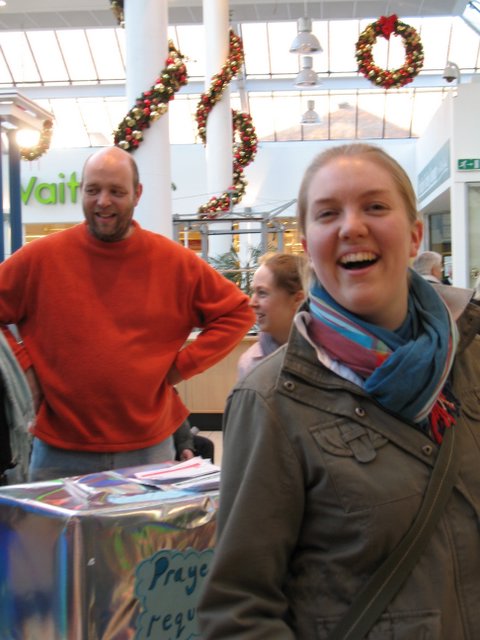
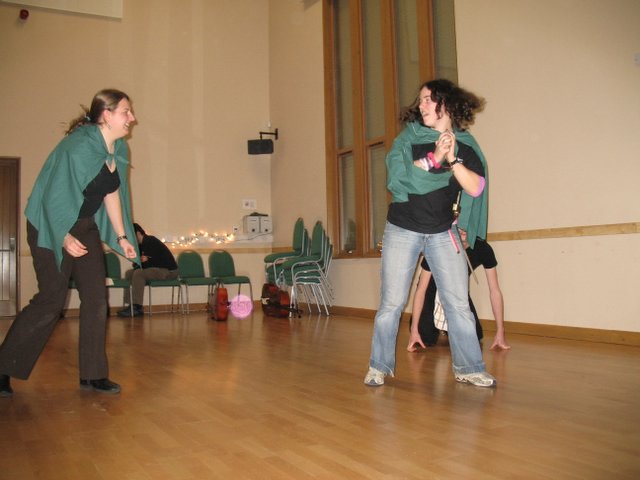
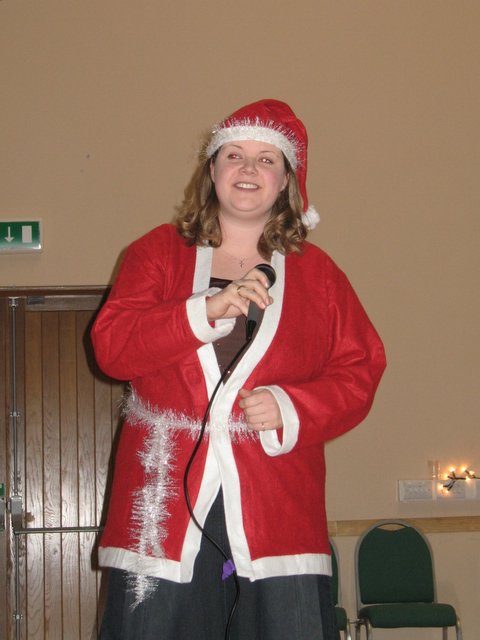
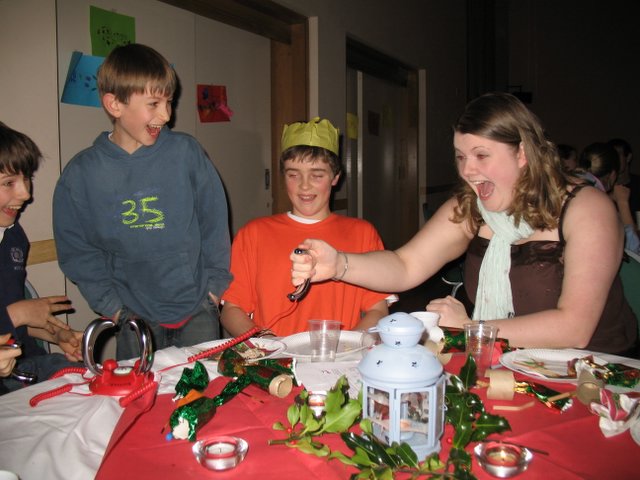
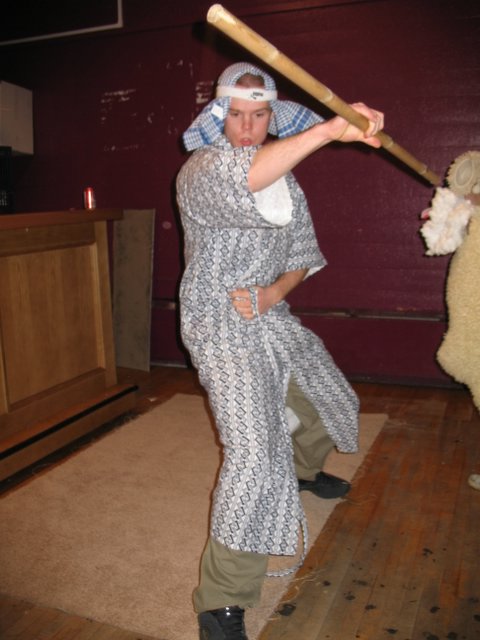
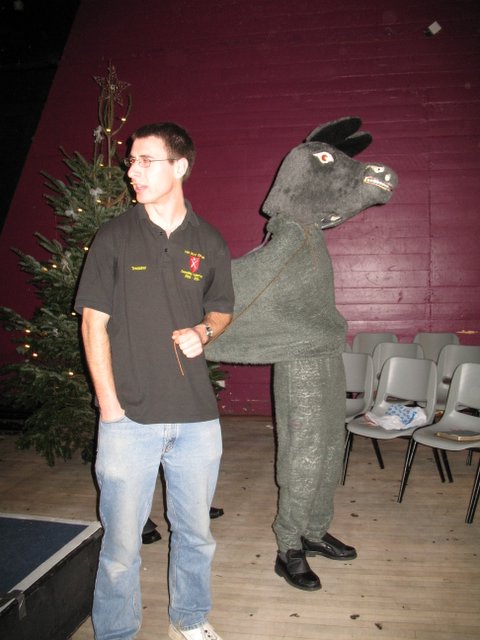
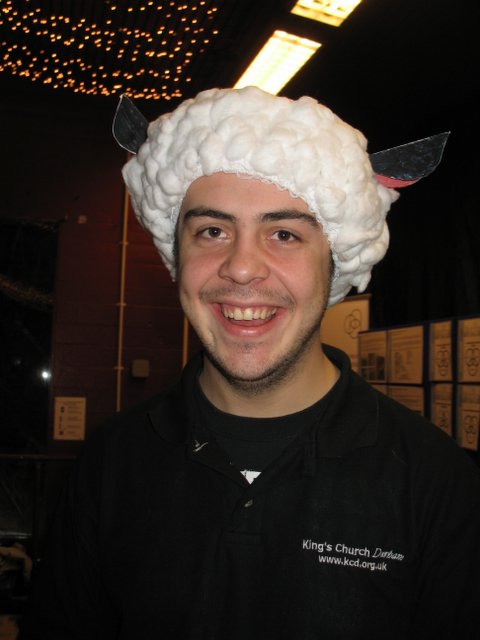
Photo mess
Apologies for the photo scramble below. I was playing with Picasa but it wouldn't let me upload more than 4 at a time... shame. Then the order got all mixed up and now I can't be bothered to untangle them!
Below you will find pictures from
- the Student Leaders 'Weekend' Away
- the Kings Christmas Party
- Present Wrapping at The Gates
- the Kings Carol Service
- Cell Social
- Seymour and Katherine's new addition, Pepper.
Perhaps you can work out which pictures go with which..?!
Below you will find pictures from
- the Student Leaders 'Weekend' Away
- the Kings Christmas Party
- Present Wrapping at The Gates
- the Kings Carol Service
- Cell Social
- Seymour and Katherine's new addition, Pepper.
Perhaps you can work out which pictures go with which..?!
Subscribe to:
Posts (Atom)